Save Nevada’s Wild Horses 🐴💔


The BLM is planning to wipe out 98% of a beautiful wild horse herd in Nevada—going from over 500 horses to just a handful. 😢 These horses are a living symbol of freedom and deserve to stay wild and free.

📢 You can help!
✍️ Sign the petition ➡️ Click here
📤 Share it with friends and family
💬 Speak up for them before it’s too late

Let’s protect these horses and their home 🏞️💛


A Sweet Rescue in Springville 🐾✨


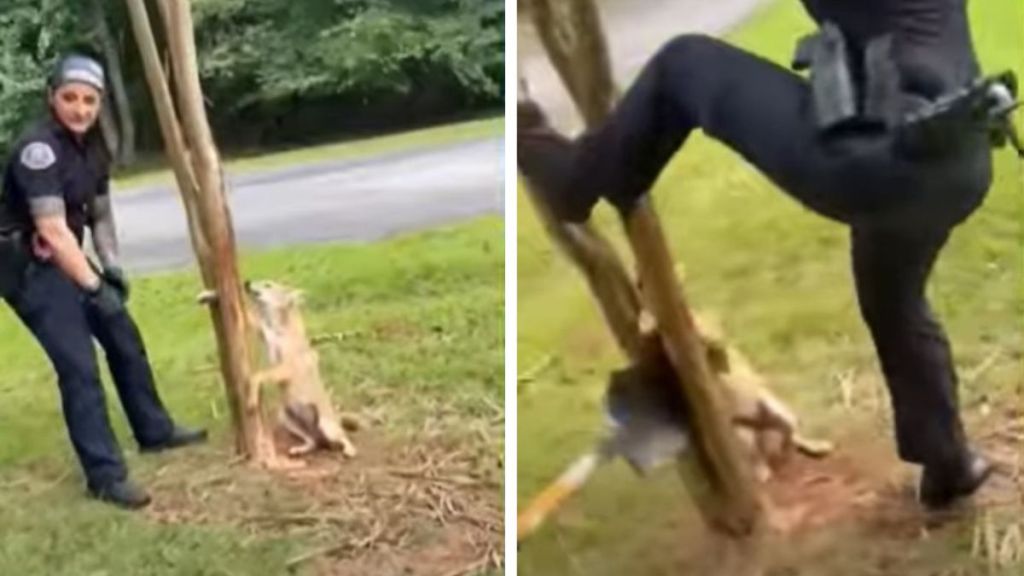
In Springville, Alabama, a young coyote got his front paw stuck in the gap of a crepe myrtle tree. The poor pup was barking and struggling to free himself when help arrived.

Two police officers, Maggie Milazzo and Jeff King, worked together to help him. Maggie used her legs to try shifting the tree, while Jeff used a shovel like a pry bar to widen the gap. Their teamwork worked, and the little coyote was able to pull his paw free and run back into the woods.

I’m so happy for the coyote, I’m so glad he found his way out. Loved how the officers helped 💛


🐾💛 Victory for the Dogs!

I’m so happy to share some good news! 🐶✨ Thanks to incredible whistleblowers, public outcry, and thousands of voices speaking up, including those who signed the petition on my blog—dogs will no longer be used in painful, invasive experiments at St. Joseph’s Hospital in London, Ontario.

For years, these sweet souls endured cruel, outdated heart attack experiments before being killed. But that ends now. 🙏

The fight isn’t over though—pigs and rodents are still suffering in the hospital’s hidden lab, and we’re pushing for all surviving animals to be rehomed instead of killed or sold for more experiments.

This win proves that when we speak up for animals, change is possible. 🌿💛 Let’s keep going for all the animals still waiting for freedom.


If you’d like to help keep the momentum going and support these causes, you can donate here:
👉 ajdonate.ca/stjos 💌 Every bit helps! 🐾✨

A Victory for Asha and the Quartz Pack

I’m so happy to share some incredible news! After spending over 18 months in captivity, Asha — a beautiful Mexican wolf — and her young family have finally been freed.

Many of you will remember Asha from my earlier post urging people to sign the petition for her release. Twice, she made the brave journey north into New Mexico, crossing the human-made boundary of Interstate 40. For simply following her instincts and exploring new territory, she was captured and confined — taken from the wild she belonged to.

But thanks to the voices of people across the country who spoke up for her, Asha is free again. Alongside her mate, Arcadia, and their pups, she is now part of the wild once more. Together, they are known as the Quartz Pack — a name that feels as strong and enduring as their spirit.

This is more than just one family’s freedom. It’s a reminder of the resilience of wolves and their right to roam. Asha’s pups will also bring much-needed genetic diversity to the critically endangered population of Mexican wolves, also called lobos.

This victory belongs to everyone who refused to stay silent — and to Asha herself, who never gave up on the wild.

Here’s to the Quartz Pack, and to every wolf who still runs free. 🐺✨

Sign these 2 Petitions Please

Sign and share please.

Asha the Endangered Wolf and Her Pups Are Being Held Captive. Demand Her Release!

St. Joseph’s Hospital: Stop Animal Experiments & Rehome Survivors!

St. Joseph’s Hospital in London, Ontario is conducting horrifying experiments on dogs, pigs, and rodents in secret hospital labs. Whistleblowers report that dogs under a year old are being subjected to heart attacks lasting up to three hours. Those who survive are nursed back to health—only to endure repeated imaging tests until they are eventually killed. 

Please sign and share. https://action.animaljustice.ca/page/174562/action/1?ea.tracking.id=banner&utm_source=banner&utm_medium=website&utm_campaign=st_jos&_gl=1*8rkunh*_gcl_au*OTg5NTg5MTU1LjE3NTQyNzc4NTQ.

10 Unique Facts About Coyotes


1. Coyotes put out fires.
Whether this is true or myth, there’s a fascinating story from Hope Ryden’s book God’s Dog. She witnessed a coyote actually putting out a small fire. A man lit an envelope on fire and tossed it near a coyote. The coyote jumped on it, stamping out the flames with her feet, then pushed the smoldering paper against the ground until the fire was completely out. Apparently, coyotes have a knack for putting out small fires. That’s pretty incredible!

2. Both male and female coyotes have strong parental instincts.
Coyotes are a team when it comes to raising their pups. Both mom and dad work together to protect and care for their young. The male brings food, sometimes even regurgitating it for the pups, and helps teach them how to hunt. Coyotes have also been known to adopt orphaned pups, showing how deeply they value family.

3. Coyotes mate for life.
Coyotes form strong lifelong bonds with their mates. They are known to be highly monogamous, staying with the same partner “till death do us part.” Only when a mate dies do they find a new partner. This loyalty is seen especially in urban coyote populations and is truly a beautiful natural bond.

4. Coyotes are endemic to North America.
Coyotes are native to and found only in North America. They’re one of seven canid species in Canada and have adapted remarkably well across the continent’s many habitats.

5. Coyotes only breed once a year.
Their breeding season happens between January and March, and pups are usually born in April or May. Like many other canids, coyotes have just one breeding cycle per year.

6. There are melanistic (black) coyotes.
Melanistic coyotes, or black coyotes, are real! They aren’t a separate species, just a color variation caused by a genetic mutation that increases dark pigment in their fur. This mutation isn’t unique to coyotes—it also shows up in domestic dogs and wolves.

7. Coyotes are closely related to wolves and domestic dogs.
Coyotes, wolves, and dogs all belong to the same family, Canidae, and share the genus Canis. Despite this close relationship, coyotes are their own distinct species.

8. Coyotes have expanded their territories dramatically.
Over the last few decades, coyotes have spread across North America faster than any other carnivore, moving into new areas and adapting to a wide variety of environments.

9. Coyotes have been on Earth way longer than humans.
Fossil records show coyotes have been around for approximately 740,000 to 850,000 years. In comparison, modern humans have only existed for about 300,000 years.

10. Coyotes are sacred beings in Diné (Navajo) culture.
In Navajo stories, Mąʼii (Coyote) is one of the first sacred animals. Alongside Áłtsé Hastiin (First Man) and Áłtsé Asdzą́ą́ (First Woman), Mąʼii played a major role in creating and ordering the world. Coyotes are seen as teachers and creators, representing the balance between chaos and harmony.


🌿 A Sad Day for Animal Rescuers and Advocates 🦊💔


Unfortunately, Mikayla Raines of Save A Fox Rescue has passed away.

This is a huge loss for the animal rescue community. Mikayla dedicated her life to saving so many animals—especially foxes, but not just foxes. She also rescued coyotes, like the famous Dakota and, more recently, Yote. She even took in black-backed jackals—a rare and incredible act of compassion.

Her impact was far-reaching. Her love, care, and commitment to misunderstood animals inspired thousands of us to look at these wild souls with more kindness and curiosity.

Mikayla is survived by her husband Ethan, who has promised to continue her legacy, and their young daughter Freya. 🕊️

My condolences go out to her human and wildlife family. 🌺

If you’ve ever followed her work, admired her rescues, or loved any of the animals she helped save, now is the best time to donate. Let’s keep her dream alive and support the animals that still need us.

➡️ Visit saveafox.org to donate 🐾🧡

Rest in sweet heaven, Mikayla.
Thank you for everything you did for the animals. Your spirit will live on in every fox, every pawprint, and every heart you touched.

🕯️🌙 R.I.P Mikayla Raines


Where the Wild Ones Find Peace: My Love for the Écomuseum Zoo

Tucked away on the western edge of Montreal is one of my favorite places in the world—a place that is more like a sanctuary than a zoo. A forever home for those who can’t return to the wild. A place where healing, curiosity, and love for Québec’s native wildlife come together.

It’s called the Écomuseum Zoo, and I hope that if you care about animals, you’ll visit, support, and maybe even love it like I do.

More Than a Zoo

The Écomuseum is home to animals that were either injured, orphaned, or deemed non-releasable. These animals are not just on display—they’re cared for with deep respect. Every habitat is created with the animals’ comfort in mind. There’s no exotic species here—only animals native to Québec: the ones who live in our forests, wetlands, and skies.

Wolves, foxes, bears, turtles, owls, raccoons, porcupines, and more… each with their own story. Each with a second chance.

It’s a place of compassion. And that compassion shows in everything.

My Time with Akela 🐺

I’ll never forget my visits with Akela, the white wolf. He was always calm and elegant, like a quiet guardian of the green space he calls home. Sometimes I’d find him lying in the tall grass, sunlight flickering through the leaves, looking peaceful and majestic. I always took a quiet moment to just watch.

One morning, a zookeeper told me something that made me smile—Akela loves to pose for pictures. Apparently, he knows when people are watching and just stays there, striking a regal pose like the king of the forest. And honestly… he does. He’s so photogenic!

What’s funny is that I usually went to the Écomuseum to see the coyotes—but Akela was always there too, quietly stealing the spotlight. And I didn’t mind at all. It’s like he knew he belonged in every visit, every memory.

The Arctic Fox Family ❄️

Every time I visit the Écomuseum, the Arctic foxes are always there—curled up in the grass, pacing softly, or just watching the world go by. There’s a whole little family of them, and somehow, they’re always visible.

Always around, always adorable.
One of the Arctic foxes from the Écomuseum crew—these cuties are always out and about like they’re running the place.

The Coyotes: Victor, Aggy & Canyon 🐾

And then there are the coyotes.

I’ve been sponsoring Victor for two years now, and I always stop to visit him and his companion Aggy. They each have three legs, but they don’t let that define them. They move through their space with calm curiosity, and there’s something powerful in how quietly they live.

One morning I arrived early and met a lovely staff member who was feeding them. She told me that the third coyote, Canyon, was new and still shy—that he was afraid of the wind. I never forgot that. She also told me the coyotes love playing with egg cartons, even if it makes a mess, and how they’re so gentle that birds will often steal food right out from under them. I actually witnessed that once.

Masters of camouflage.
Coyotes blend in so well with their surroundings—it’s like they’re part of the forest floor itself. If you’re not paying attention, you might miss them completely… and that’s kind of their magic.

The Other Wild Ones 🦊🐾

The Écomuseum is also home to red foxes, bobcats, and Canadian lynxes—each one with their own energy. The red foxes are actually the beautiful silver-phase variety, with dark, shimmering coats that catch the light like shadow and smoke. The bobcats and lynxes are quieter, more intense. Unlike the coyotes, they’re not so tolerant when birds come too close to their food. There’s a little standoff in the air—a reminder that even in peaceful places, wild instincts are alive and well.

The People Who Make It Special

The animals are incredible, but the people who care for them are just as inspiring. Every zookeeper I’ve spoken to has been knowledgeable, kind, and clearly in love with the animals they work with. The staff and volunteers radiate that same energy. There’s real devotion in this place.

That’s why I became a lifetime member of the Écomuseum.

How You Can Help

If this place speaks to you, here are a few ways to support them:

🌿 Sponsor an animal – like I do with Victor. Your contribution helps feed and care for them.

🌿 Make a donation – even small amounts go a long way.

🌿 Become a member – it’s worth every visit, every season.

Or just come visit. Take the time to walk the paths, hear the birds, see the animals up close, and feel what this place is really about. It’s healing. It’s hopeful. It’s home.

With love and gratitude for those who care for the wild ones,
Kodkod

A Call to Protect Alberta’s Wildlife

I wanted to bring attention to a heartfelt and powerful open letter sent on May 5, 2025 by the Alberta Wilderness Association (AWA), co-signed by scientists and community groups. It’s addressed to Minister Todd Loewen, asking him to rescind recent wildlife‑management changes that threaten Alberta’s keystone and vulnerable species

Here’s what they’re asking to be reversed:

  • Female cougar hunting quotas more than doubled
  • Six new cougar‑management areas opened with non-zero quotas
  • Expanded special‑licence hunting for at‑risk mountain goats
  • Legalized public hunting of “problem” grizzly bears, a Threatened species
  • Lifted quotas on furbearers such as wolverines, fishers, Canada lynx, and river otters

These decisions were made without proper scientific backing, public consultation, or respect for Indigenous and conservation voices.

AWA is clear: “Wildlife in Alberta is shared by all Albertans…decisions that affect wildlife—and especially keystone species—must be informed by the best available science”

Why this matters

Alberta’s wild lands aren’t just scenic backdrops—they’re living, breathing systems where every creature plays a part. Cougars, grizzly bears, wolverines, lynx… they help maintain ecological balance. When management decisions are made hastily or influenced by narrow interests, entire ecosystems suffer.

History shows the best way to protect wildlife isn’t needless hunting—it’s protecting habitat, consulting science, and nurturing coexistence.

What you can do

  1. Please sign and share the petition demanding the Alberta government revoke these harmful hunting and trapping changes:
    👉 Protect Alberta Wildlife – rescind unscientific hunting & trapping changes
  2. Spread the word—on social media, in your community, even in conversations over coffee. The more voices, the harder it is to ignore.

This isn’t just about policies on paper—it’s about every wild creature that still roams freely. Let’s demand decisions guided by science, transparency, and respect for all who share this land.

With hope and solidarity,
Kodkod 🐾

Meet the Güiña: The Tiny Wild Cat of Southern Chile

Photo by Pía Vergara, via Ladera Sur

The güiña, also known as the kodkod, is the smallest wild cat in the Americas—and one of the least known. But this rare feline has a big story. Native to the temperate rainforests of southern Chile and parts of Argentina, the güiña is elusive, solitary, and deeply woven into the landscape and culture of the region.

Its Mapudungun name—“güiña”—is a reflection of the Indigenous roots of its homeland. The scientific name, Leopardus guigna, may sound big, but the cat itself is tiny—usually no larger than a house cat, with spotted fur, rounded ears, and a tail nearly as long as its body.

Despite its small size and shy nature, the güiña plays an important role in its ecosystem as a predator of small mammals and birds. Sadly, its forest home is shrinking. As logging, agriculture, and urbanization continue to spread, the güiña faces increasing threats from habitat loss and fragmentation. It’s also sometimes killed by humans who mistakenly believe it preys on chickens or other domestic animals.

Today, the güiña is listed as Vulnerable on the IUCN Red List. With an estimated population decline of over 30% in the past decade, conservation efforts are more important than ever.

Credit: Photo taken at the private facility of Fauna Andina, Nov 2024 . By an unidentified contributor, via ZooChat

But there is hope.

Many organizations and researchers are working to protect this mysterious little feline. Here are a few ways you can help:

The güiña may be small, but she carries an ancient spirit—one that deserves space, safety, and a future. 🌲🐾

Photo credit: Nicolás Gálvez, via Wikimedia Commons