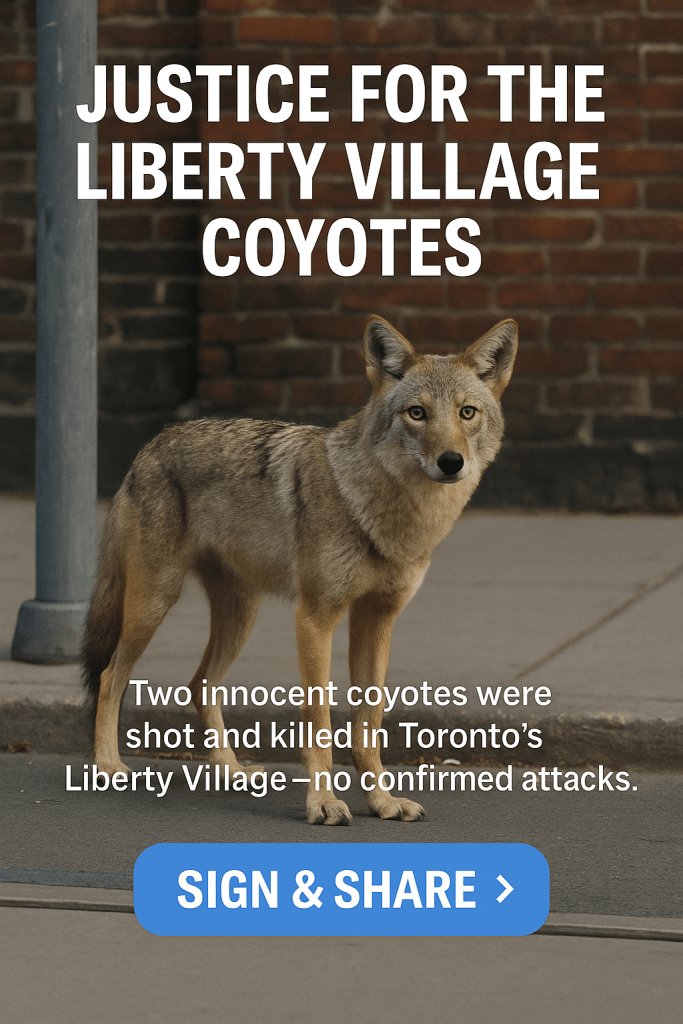
Two innocent coyotes were shot and killed in Toronto’s Liberty Village — even though there were no confirmed attacks. 💔 These gentle beings were simply trying to live in the only home they knew.
Coyotes play a vital role in our cities — keeping ecosystems balanced and rodent populations under control. Killing them is cruel, unnecessary, and ineffective. There are always better, humane solutions like education, hazing, and protecting attractants. 🌿
Coyotes are a vital part of our ecosystem — intelligent, family-oriented animals who keep nature in balance. But right now in Nova Scotia, they’re facing cruel and unnecessary culls.
👉 Killing coyotes doesn’t solve “problems.” Science shows it often makes things worse by breaking up family groups and causing populations to rebound even faster.
Instead of fear and cruelty, we need coexistence and compassion. 💚
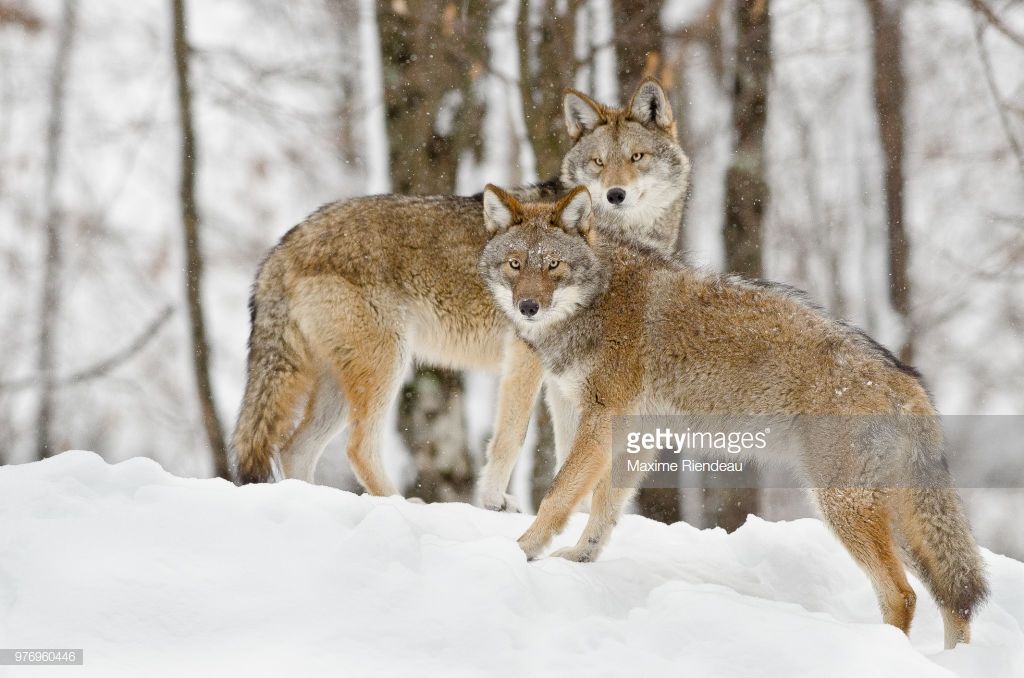
Two coyotes standing alert on a snowy landscape, Parc Omega, Montebello, Québec, Canada.
I just added my name. Will you stand with me?
I signed the petition “Urge Edmonton to Stop the Unnecessary Killing of Coyotes” (you can sign it too: https://chng.it/f57xx4jnw5) Every signature matters. Because coyotes are not “pests” — they’re vital, fascinating, and misunderstood creatures. Here’s why you should care — and act.
Why Coyotes Are So Important
1. Guardians of ecosystem balance
Coyotes help keep rodent populations in check, prevent overgrazing, and control smaller predators. Their presence helps maintain healthier, more balanced ecosystems. When we remove them, unintended consequences ripple outward.
2. They’re native to Canada
Coyotes are part of Canada’s natural heritage. They’ve adapted and evolved here, playing an essential role in the food web across provinces. They’re not foreigners to our lands — they belong here.
3. Lifelong bonds & devoted parents
Coyotes are often monogamous and mate for life. They raise their pups together, teaching them survival skills, defending their territory, and caring for their family. Their parental devotion is beautiful and should be respected, not disrupted.
4. Killing doesn’t solve problems
Research shows that mass culls often backfire — new coyotes simply migrate into vacated territories, creating more conflict, not less. Non-lethal methods like hazing, public education, habitat modification, feeding bans, and tolerance are proven, humane alternatives.
Why Edmonton Needs to Do Better
Over the past three years, an estimated 75 coyotes have been killed in Edmonton — about 25 per year. (Change.org)
The city currently contracts with an exterminator to carry out culls. (Change.org)
This approach is both morally troubling and ecologically damaging.
Instead, the city should partner with organizations like Coyote Watch Canada and adopt humane management strategies. (Change.org)
Share this post far and wide — on Facebook, Twitter, Instagram, email, word of mouth.
Write to local & city officials — let Edmonton know you oppose lethal culls and support humane alternatives.
Support wildlife organizations working to protect coyotes and educate communities.
Stay informed & spread knowledge — when people understand how essential coyotes are, policies can shift.
We have a chance — a responsibility — to protect these beautiful, wild beings. To respect their place in our landscapes, their deep family bonds, and their role in nature’s harmony.
If you value compassion, respect for wildlife, and ecological balance, please sign and share the petition now: https://chng.it/f57xx4jnw5
Louisiana is trying to pass a ban that would make it illegal for licensed wildlife rehabilitators to help coyotes when they’re injured, orphaned, or sick. This means that coyotes like Ti Loup and Koa—two little orphans currently being cared for at Geaux Wild Rehab—would never have had the chance to receive the love, medicine, and second chance they deserve.
👉 You can see them here: Ti Loup & Koa TikTok video. These pups are alive and thriving because of wildlife rehabilitation. Without it, their story would have ended in suffering.
But if this ban goes through, no future coyote in Louisiana will get that chance.
Why This Matters
Coyotes are North America’s native wild dogs. They play a vital role in keeping ecosystems balanced by controlling rodents, cleaning carrion, and adapting to fill niches left empty by other predators.
Rehabilitators see very few coyotes each year. In 2024, only six coyotes were rehabbed in Louisiana. That’s such a tiny number compared to the population—it’s not causing problems.
It’s unfair and inhumane. If a coyote is hit by a car, poisoned, trapped, or orphaned because of human activity, it deserves care. To deny them help is cruel.
Education works better than bans. Teaching people how to coexist peacefully with coyotes reduces conflicts far more than preventing their care.
Armadillos would also be affected. The proposed rule would ban rehab for them too, leaving injured armadillos without care as well.
Send an Email: Urge Louisiana officials to vote NO on banning coyote rehabilitation. Tell them coyotes and armadillos deserve compassion, not cruelty.
Email addresses are listed in the petition description. Even a short, heartfelt message makes a difference.
Spread the Word: Share Ti Loup and Koa’s story. Post the petition. Let people know this fight is about protecting our native wildlife.
Closing Thoughts
Coyotes are survivors—resilient, intelligent, and deeply misunderstood. But even survivors need help sometimes. Please stand up for Ti Loup, Koa, and all the coyotes who may come after them. They are not “outlaw quadrupeds.” They are family to the land, and they deserve a chance to heal.
🐺💙 Please, sign, share, and speak up. For the coyotes. For the armadillos. For a more compassionate world.
Geaux Wild Rehab has started a petition to stop a new rule that would ban the rehabilitation of coyotes and armadillos in Louisiana. This means if one of these animals is injured, orphaned, or in need, licensed rehabbers wouldn’t be able to help them anymore. 😢
Coyotes are amazing ecosystem helpers 🌏they keep rodent populations in check, clean up carrion, and play an important role in balance. And wildlife rehabbers are trained, compassionate people who give injured animals a second chance. 💕
👉 Banning their care doesn’t solve “conflicts.” It only takes away compassion.
✨ How you can help:
✅ Sign the petition ➡️ Sign here ✅ Share it with friends, family, and on social media 📲 ✅ Speak up for wildlife 🐺🐾
Every signature makes a difference. Let’s protect the right to care for these beautiful wild beings. 🌿💚
The BLM is planning to wipe out 98% of a beautiful wild horse herd in Nevada—going from over 500 horses to just a handful. 😢 These horses are a living symbol of freedom and deserve to stay wild and free.
📢 You can help! ✍️ Sign the petition ➡️ Click here 📤 Share it with friends and family 💬 Speak up for them before it’s too late
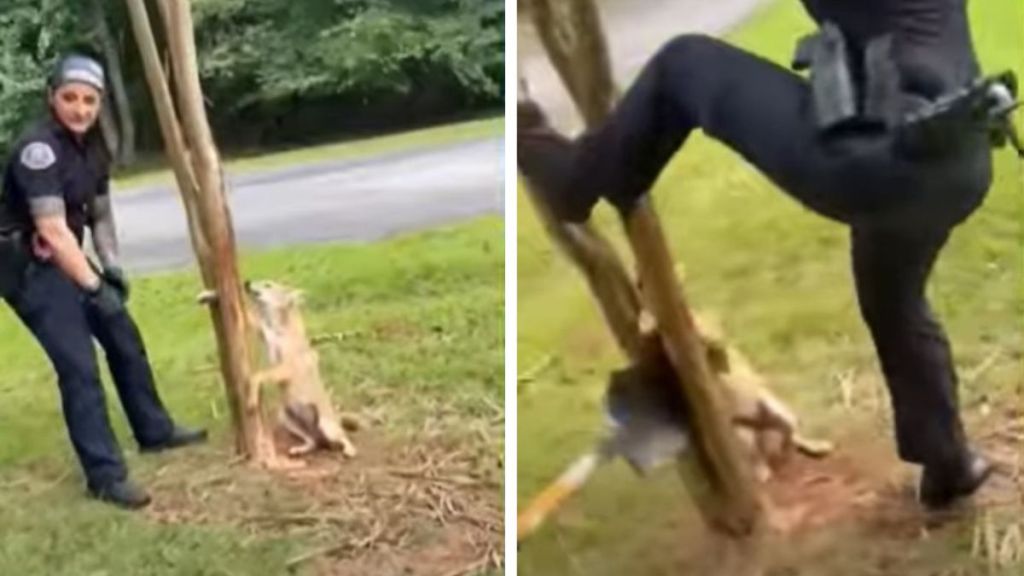
In Springville, Alabama, a young coyote got his front paw stuck in the gap of a crepe myrtle tree. The poor pup was barking and struggling to free himself when help arrived.
Two police officers, Maggie Milazzo and Jeff King, worked together to help him. Maggie used her legs to try shifting the tree, while Jeff used a shovel like a pry bar to widen the gap. Their teamwork worked, and the little coyote was able to pull his paw free and run back into the woods.
I’m so happy for the coyote, I’m so glad he found his way out. Loved how the officers helped 💛
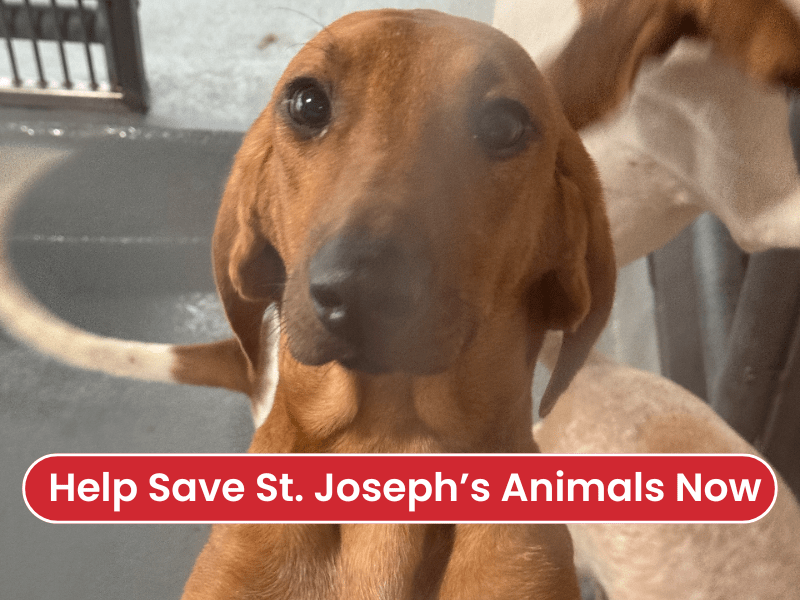
I’m so happy to share some good news! 🐶✨ Thanks to incredible whistleblowers, public outcry, and thousands of voices speaking up, including those who signed the petition on my blog—dogs will no longer be used in painful, invasive experiments at St. Joseph’s Hospital in London, Ontario.
For years, these sweet souls endured cruel, outdated heart attack experiments before being killed. But that ends now. 🙏
The fight isn’t over though—pigs and rodents are still suffering in the hospital’s hidden lab, and we’re pushing for all surviving animals to be rehomed instead of killed or sold for more experiments.
This win proves that when we speak up for animals, change is possible. 🌿💛 Let’s keep going for all the animals still waiting for freedom.
If you’d like to help keep the momentum going and support these causes, you can donate here: 👉 ajdonate.ca/stjos 💌 Every bit helps! 🐾✨
I’m so happy to share some incredible news! After spending over 18 months in captivity, Asha — a beautiful Mexican wolf — and her young family have finally been freed.
Many of you will remember Asha from my earlier post urging people to sign the petition for her release. Twice, she made the brave journey north into New Mexico, crossing the human-made boundary of Interstate 40. For simply following her instincts and exploring new territory, she was captured and confined — taken from the wild she belonged to.
But thanks to the voices of people across the country who spoke up for her, Asha is free again. Alongside her mate, Arcadia, and their pups, she is now part of the wild once more. Together, they are known as the Quartz Pack — a name that feels as strong and enduring as their spirit.
This is more than just one family’s freedom. It’s a reminder of the resilience of wolves and their right to roam. Asha’s pups will also bring much-needed genetic diversity to the critically endangered population of Mexican wolves, also called lobos.
This victory belongs to everyone who refused to stay silent — and to Asha herself, who never gave up on the wild.
Here’s to the Quartz Pack, and to every wolf who still runs free. 🐺✨




 coyotepretty.ca