A Sweet Rescue in Springville 🐾✨


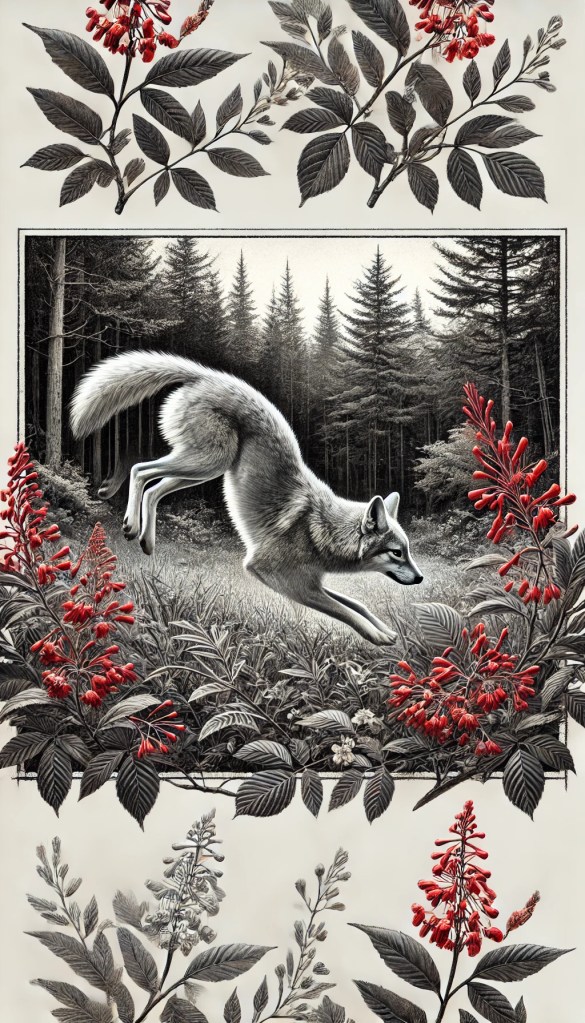
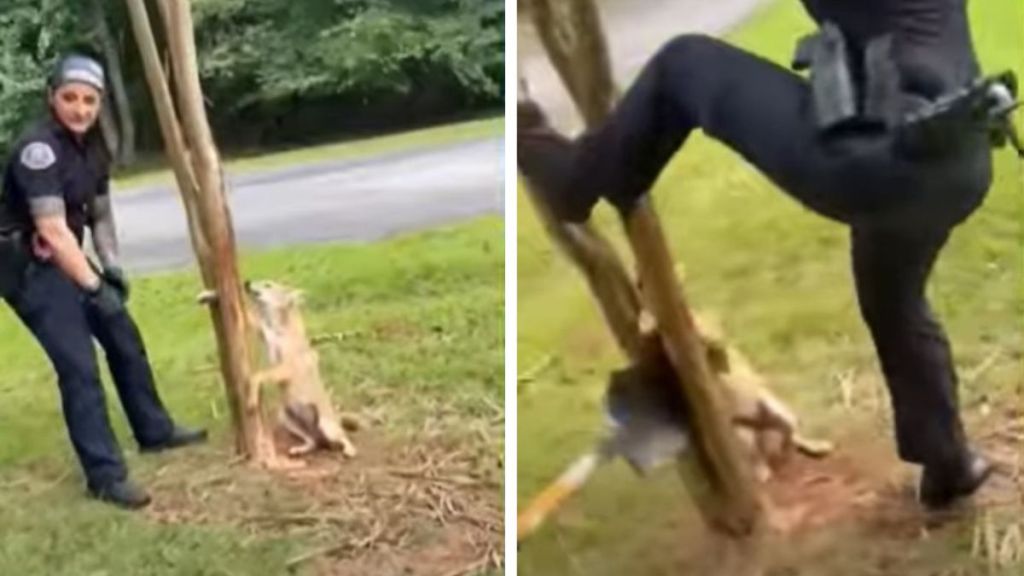
In Springville, Alabama, a young coyote got his front paw stuck in the gap of a crepe myrtle tree. The poor pup was barking and struggling to free himself when help arrived.

Two police officers, Maggie Milazzo and Jeff King, worked together to help him. Maggie used her legs to try shifting the tree, while Jeff used a shovel like a pry bar to widen the gap. Their teamwork worked, and the little coyote was able to pull his paw free and run back into the woods.

I’m so happy for the coyote, I’m so glad he found his way out. Loved how the officers helped 💛


🐾💛 Victory for the Dogs!

I’m so happy to share some good news! 🐶✨ Thanks to incredible whistleblowers, public outcry, and thousands of voices speaking up, including those who signed the petition on my blog—dogs will no longer be used in painful, invasive experiments at St. Joseph’s Hospital in London, Ontario.

For years, these sweet souls endured cruel, outdated heart attack experiments before being killed. But that ends now. 🙏

The fight isn’t over though—pigs and rodents are still suffering in the hospital’s hidden lab, and we’re pushing for all surviving animals to be rehomed instead of killed or sold for more experiments.

This win proves that when we speak up for animals, change is possible. 🌿💛 Let’s keep going for all the animals still waiting for freedom.


If you’d like to help keep the momentum going and support these causes, you can donate here:
👉 ajdonate.ca/stjos 💌 Every bit helps! 🐾✨

A Victory for Asha and the Quartz Pack

I’m so happy to share some incredible news! After spending over 18 months in captivity, Asha — a beautiful Mexican wolf — and her young family have finally been freed.

Many of you will remember Asha from my earlier post urging people to sign the petition for her release. Twice, she made the brave journey north into New Mexico, crossing the human-made boundary of Interstate 40. For simply following her instincts and exploring new territory, she was captured and confined — taken from the wild she belonged to.

But thanks to the voices of people across the country who spoke up for her, Asha is free again. Alongside her mate, Arcadia, and their pups, she is now part of the wild once more. Together, they are known as the Quartz Pack — a name that feels as strong and enduring as their spirit.

This is more than just one family’s freedom. It’s a reminder of the resilience of wolves and their right to roam. Asha’s pups will also bring much-needed genetic diversity to the critically endangered population of Mexican wolves, also called lobos.

This victory belongs to everyone who refused to stay silent — and to Asha herself, who never gave up on the wild.

Here’s to the Quartz Pack, and to every wolf who still runs free. 🐺✨

10 Unique Facts About Coyotes


1. Coyotes put out fires.
Whether this is true or myth, there’s a fascinating story from Hope Ryden’s book God’s Dog. She witnessed a coyote actually putting out a small fire. A man lit an envelope on fire and tossed it near a coyote. The coyote jumped on it, stamping out the flames with her feet, then pushed the smoldering paper against the ground until the fire was completely out. Apparently, coyotes have a knack for putting out small fires. That’s pretty incredible!

2. Both male and female coyotes have strong parental instincts.
Coyotes are a team when it comes to raising their pups. Both mom and dad work together to protect and care for their young. The male brings food, sometimes even regurgitating it for the pups, and helps teach them how to hunt. Coyotes have also been known to adopt orphaned pups, showing how deeply they value family.

3. Coyotes mate for life.
Coyotes form strong lifelong bonds with their mates. They are known to be highly monogamous, staying with the same partner “till death do us part.” Only when a mate dies do they find a new partner. This loyalty is seen especially in urban coyote populations and is truly a beautiful natural bond.

4. Coyotes are endemic to North America.
Coyotes are native to and found only in North America. They’re one of seven canid species in Canada and have adapted remarkably well across the continent’s many habitats.

5. Coyotes only breed once a year.
Their breeding season happens between January and March, and pups are usually born in April or May. Like many other canids, coyotes have just one breeding cycle per year.

6. There are melanistic (black) coyotes.
Melanistic coyotes, or black coyotes, are real! They aren’t a separate species, just a color variation caused by a genetic mutation that increases dark pigment in their fur. This mutation isn’t unique to coyotes—it also shows up in domestic dogs and wolves.

7. Coyotes are closely related to wolves and domestic dogs.
Coyotes, wolves, and dogs all belong to the same family, Canidae, and share the genus Canis. Despite this close relationship, coyotes are their own distinct species.

8. Coyotes have expanded their territories dramatically.
Over the last few decades, coyotes have spread across North America faster than any other carnivore, moving into new areas and adapting to a wide variety of environments.

9. Coyotes have been on Earth way longer than humans.
Fossil records show coyotes have been around for approximately 740,000 to 850,000 years. In comparison, modern humans have only existed for about 300,000 years.

10. Coyotes are sacred beings in Diné (Navajo) culture.
In Navajo stories, Mąʼii (Coyote) is one of the first sacred animals. Alongside Áłtsé Hastiin (First Man) and Áłtsé Asdzą́ą́ (First Woman), Mąʼii played a major role in creating and ordering the world. Coyotes are seen as teachers and creators, representing the balance between chaos and harmony.


El Zorro Chilote: A Tiny Treasure at the Edge of the World

Photo of a zorro chilote (Darwin’s fox) shared by u/ErickYj on Reddit. Source

Have you ever heard of the zorro chilote? Also known as Darwin’s fox, this little zorro lives deep in the temperate rainforests of southern Chile. With dark fur, curious eyes, and a secretive nature, the zorro chilote is one of the most special creatures of our land. He’s tiny—smaller than most other foxes—and only found in a few places, like Chiloé Island and the Valdivian forests of the mainland.

What makes the zorro chilote unique isn’t just his size—it’s his wild, mysterious heart. He belongs only to Chile. Nowhere else in the world does this species exist. He walks silently through the shadows of the native forest, where trees drip with moss and the ground is soft with fallen leaves. Like the güiña (kodkod), he’s part of an ancient web of life that has existed for thousands of years.

But today, this beautiful fox is in danger.

With deforestation, development, and dogs introduced by humans, the zorro chilote has fewer places to hide and hunt. The species is now considered endangered, with fewer than 1,000 individuals believed to remain in the wild. His world is disappearing—and with it, a piece of our soul.

Zorro chilote with pup.
Image originally shared by ProAraucanía in 2013, no photographer credited.

How you can help

There are still ways to protect this little guardian of the forest:

  • Support WWF’s symbolic adoption program, where you can symbolically adopt a Darwin’s fox and help fund global conservation efforts: WWF Adoption Page
  • Donate to Chiloé Silvestre, a local grassroots organization in Chile that works on behalf of the zorro chilote and other native species: Chiloé Silvestre Website
  • Learn more and support Fauna Australis and ONG Convivencia Humano-Fauna, two other organizations committed to wildlife research and coexistence in southern Chile.

The zorro chilote may be small, but his spirit is mighty. Let’s help make sure this little fox has a future—wild, free, and protected.

Hidden Cruelty: Speaking Out Against Penned Dog Hunts in Ontario

By Kodkod | Coyote Pretty


There are still places in Canada where foxes, coyotes, and rabbits are locked inside fenced enclosures—not to be rehabilitated or protected, but to be hunted for sport.

In these penned hunting facilities, dogs are released to chase, terrorize, and often kill wild animals that have no way to escape. Hunters call it “training.” But investigations show the truth: it’s bloodsport. It’s cruelty. And it’s still happening.

Recently, Animal Justice filed a lawsuit against the Ontario government, challenging the issuance of three illegal licences that appear to allow penned hunting facilities to operate in violation of the Fish and Wildlife Conservation Act. These licenses permit the use of large hound breeds—such as foxhounds, coonhounds, and bloodhounds—to chase red foxes for “training” and competitions, despite clear regulations that prohibit this unless strict conditions are met. None of the three sites in question meet the legal pen size requirements.

An undercover investigation in 2023 by Animal Justice revealed that wild animals used as bait are routinely injured, mauled, and killed. Pen owners have admitted to replenishing wildlife throughout the year—foxes and coyotes caught and used again and again.

Worse still, no inspections have been conducted at these facilities for at least two years. The system is broken—and these animals are paying the price.

Ontario remains the only province in Canada that still allows this practice. Even most U.S. states have banned it.

This is not just a wildlife issue—it’s an animal cruelty crisis.

📣 Read more about the lawsuit and investigation: https://animaljustice.ca/media-releases/animal-justice-sues-ontario-over-cruel-penned-dog-hunting-licences

🧡 If you’re able, please support Animal Justice’s court battle here: https://animaljustice.ca/donate

Coyotes and foxes deserve better than this. So do the dogs forced to become weapons.

#CoyotePretty #AnimalJustice #StopPennedHunts #Coexistence

Repost: Environmental Action, These are some of our favorite wolves that you may not know much about

For as long as humans have lived on Earth, wolves have existed alongside us, from the tundra of North America to the islands of Japan. Here are just a few of the world’s remarkable wolf species.

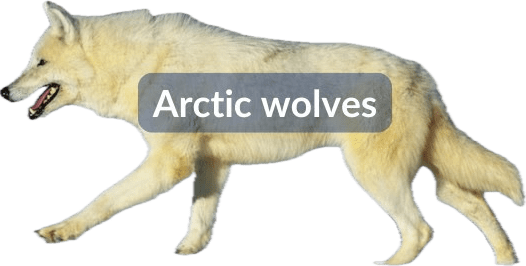
Arctic wolves are a sub-species of gray wolf that lives in the frozen northern tundra. Their beautiful white coats enable them to blend into their snowy surroundings as they hunt for arctic hares, lemmings and even caribou and bulky muskoxen.

In some ways, arctic wolves are lucky to live in such a distant part of the globe. Their isolation makes them one of the only grey wolf sub-species to not be threatened by widespread hunting. However,increased mining and oil drilling may put their food supply at risk.

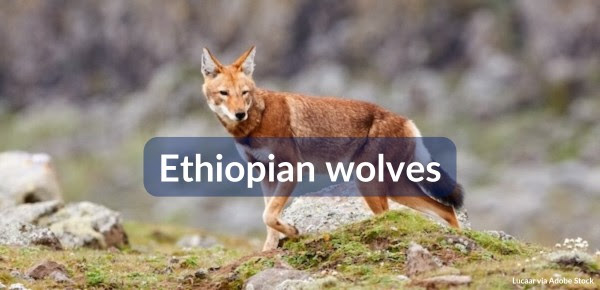
The rare and mysterious Ethiopian wolf lives in Ethiopia’s highlands. Fewer than 500 of them survive in the wild, making them one of the most endangered wolf species in the world.

These wolves have some of the most unusual diets of wolf species including, of all things, nectar! The highlands of Ethiopia contain large flowers, which the wolves have learned to lick for the sweet liquids inside.

But the flowers have the last laugh. When the wolves steal nectar, their noses become caked in pollen, which then gets transferred between flowers. This unusual relationship makes wolves the world’s biggest carnivorous pollinators.


Japanese folklore is full of stories about wolves. The Japanese wolf, known for its tiny ears, lived for thousands of years in Japan. Although they were technically a sub-species of gray wolf, the Japanese wolves diverged from their larger cousins and soon became genetically distinct.3

Tragically, the Japanese wolves are no more. The entire species was wiped out by the early 1900s after a systematic extermination campaign. Now, they remain only in story and myth.

The tragic tale of the Japanese wolf should remind us that we can’t take any species for granted. And once a species is wiped out, there’s no way to turn back the clock.


The environmental action team has been around since the first Earth Day in 1970, and their whole mission is to protect wildlife and wild places by helping people take meaningful action. From speaking up for wolves and bees to keeping our air and water clean, they’re doing important work.

They also have a little online store where you can grab eco-friendly gear and gifts that help support the cause—things like stickers, wildlife-themed tees, and more. And if you’re in the spirit to give back, they make it easy to donate directly to their campaigns.

You can learn more at environmental-action.org or check out their store here.

Meet the Ethiopian Wolf: The Rarest Wild Canine in Africa

An Ethiopian wolf watches the highlands. Photo by Shutterranger (via Rainforest Trust)

Graceful. Solitary. Endangered.

You may never have heard of the Ethiopian wolf—and you wouldn’t be alone.
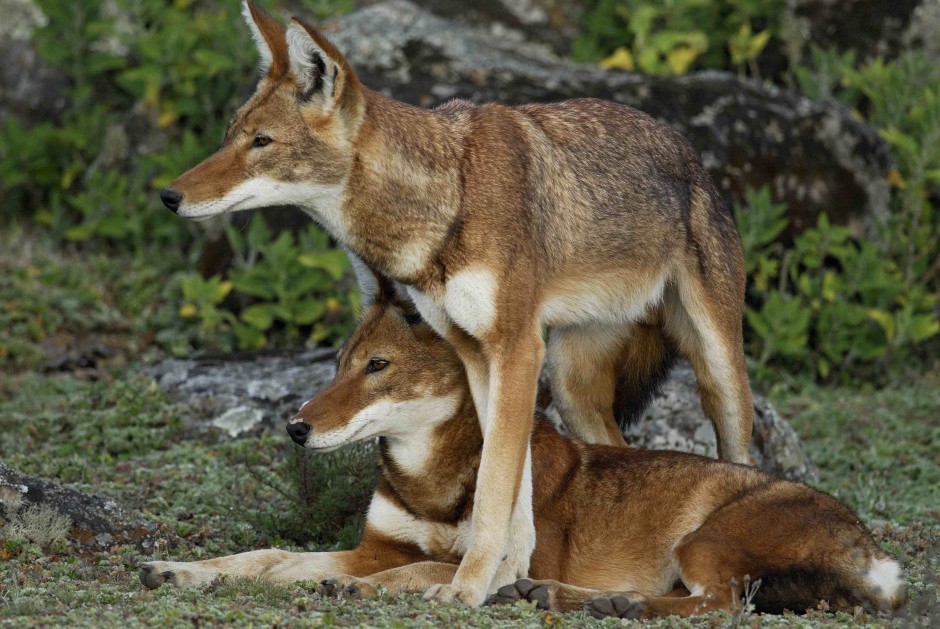
It’s one of the world’s most endangered canids, with fewer than 500 individuals left in the wild. Yet this elegant, fox-like creature has roamed the highlands of Ethiopia for thousands of years.

Photo by Delphin Ruche, courtesy of the Ethiopian Wolf Conservation Programme (www.ethiopianwolf.org). Used for educational and awareness purposes

I first learned about them through a nature documentary. They looked like red coyotes, slender and alert, moving through mist-covered grasslands like spirits of the mountain.

But they’re not coyotes—they’re Canis simensis, a species found nowhere else on Earth.

They live high in the Ethiopian mountains, in places where the air is thin and the land feels ancient. They hunt alone, feeding mostly on rodents like mole rats and giant grass mice. Yet they live in close-knit family packs, with deep social bonds and a quiet strength.

Like many wild animals, their biggest threat is not nature—it’s us.
Habitat loss. Disease from domestic dogs. Climate change. Isolation.
And still, they endure.

The Ethiopian wolf may be rare, but it matters.
It reminds us that wildness still exists in corners we’ve forgotten.
And that every species deserves to be seen.

If this beautiful canid touched your heart, here is an organization you can check out:

Photo by Will Burrard-Lucas, from The Ethiopian Wolf Project. Used with respect for educational awareness.

https://willbl.com/

Day 5 of Coyote Awareness Week

Why Coyote Relocation Does More Harm Than Good

Coyotes are often misunderstood creatures, and when they show up in urban or suburban areas, people sometimes assume the best solution is to trap and relocate them. It sounds like a humane choice—move the animal to a safer, more “natural” place—but in reality, relocation often causes more harm than good.

Coyotes Know Their Home Best

Like most wildlife, coyotes establish territories based on food availability, shelter, and social dynamics. When a coyote is removed from its home range, it’s suddenly thrown into unfamiliar surroundings. It has to compete with other coyotes for resources, find new shelter, and avoid new dangers. Many relocated coyotes struggle to survive and often don’t make it.

The Empty Space Doesn’t Stay Empty

Nature doesn’t like a vacuum. Removing a coyote from its territory doesn’t solve the “problem” people are trying to fix. Instead, it creates an open spot that other coyotes will eventually move into. This can actually increase local coyote activity, as younger, less-experienced animals take over the space and may be less cautious around humans.

The Humane Alternative: Coexistence

The best way to handle coyotes is to allow them to remain in their established territories while using simple coexistence strategies. Securing garbage, keeping pets indoors at night, and using humane deterrents can prevent conflicts without disrupting the natural balance. Over time, resident coyotes help keep populations stable and maintain a healthy ecosystem.

Coyotes aren’t the enemy—they’re simply trying to survive. Relocating them often leads to suffering and unintended consequences. Instead of removing them, understanding their role and making small changes can lead to peaceful coexistence. Nature has a way of balancing itself if we just let it.

🌕🐺🐺🐺🐺🐺🐺🐺🐺🐺🐺🌕

This is coyote 434 from the Urban Coyote Research project.


The Reality of Relocation

The Urban Coyote Research Project studied relocated coyotes and found that they don’t stay where they’re released. Instead, they try to return to their original territory—often with tragic results.

“Although the primary objectives of the Cook County Coyote Project did not involve relocating coyotes, we did monitor 12 relocated nuisance (or rehabilitated) coyotes from the city of Chicago to document their movements and fates. We found that no relocated coyotes remained at their release site despite being located in favorable coyote habitat (usually they were gone within 48 hours or less), and each of them traveled in the general direction of their origin. No coyotes made successful returns, and most were killed by cars or hunters as they left the release site.” — Urban Coyote Research Project

This study reinforces why relocation isn’t the answer. Instead of removing coyotes, the best approach is to let them stay in their established territories and use simple coexistence strategies to avoid conflicts. In the long run, it’s better for the animals—and for us.


Day 4 of Coyote Awareness Week

This is a passage from the book Coyote America by Dan Flores.

Bright Lights, Big Cities

Photo by Johanna Turner


If it seems counter intuitive that a predator like a coyote would find life in town to be fat-city, consider this additional evidence; in rural Illinois, where residents shoot, trap, and harass coyotes, only 13 percent of coyote pups survive to maturity. In the Chicago metropolitan area, a whopping 61 percent of coyote pups survive to adulthood. Like human adolescents, male coyote pups are always the most at-risk pack members. the easiest to trap or poison or shoot. But in town young male coyotes tend to survive at the same rate as females.

In fact, only in preserved wildlands like national parks does coyote survivability compare to what coyotes experience in cities. For a twenty-first century coyote, town life is pretty obviously the good life, especially compared to the dangers of rural America. We’re going to have to start imagining cities as twenty-first-century coyote preserves in much the way national parks were in the twentieth century.


If you want to buy this amazing book, click here for US customers or here for Canadian customers.