🐾 Protecting Canada’s Coyotes: Why We Must Act Now

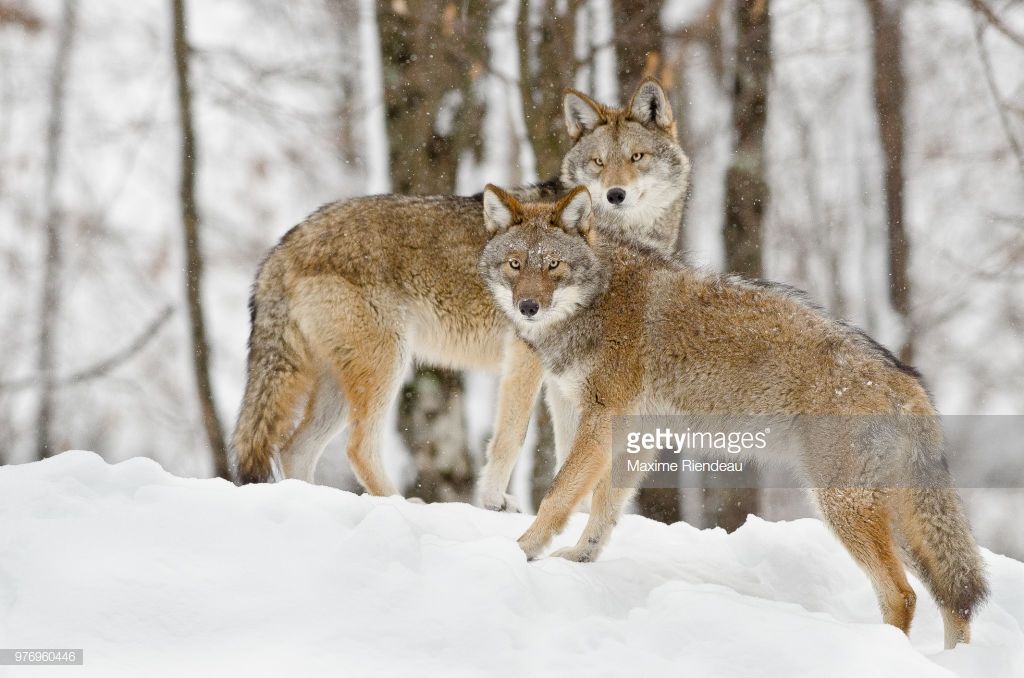
Two coyotes standing alert on a snowy landscape, Parc Omega, Montebello, Québec, Canada.


I just added my name. Will you stand with me?

I signed the petition “Urge Edmonton to Stop the Unnecessary Killing of Coyotes” (you can sign it too: https://chng.it/f57xx4jnw5)
Every signature matters. Because coyotes are not “pests” — they’re vital, fascinating, and misunderstood creatures. Here’s why you should care — and act.


Why Coyotes Are So Important

1. Guardians of ecosystem balance

Coyotes help keep rodent populations in check, prevent overgrazing, and control smaller predators. Their presence helps maintain healthier, more balanced ecosystems. When we remove them, unintended consequences ripple outward.

2. They’re native to Canada

Coyotes are part of Canada’s natural heritage. They’ve adapted and evolved here, playing an essential role in the food web across provinces. They’re not foreigners to our lands — they belong here.

3. Lifelong bonds & devoted parents

Coyotes are often monogamous and mate for life. They raise their pups together, teaching them survival skills, defending their territory, and caring for their family. Their parental devotion is beautiful and should be respected, not disrupted.

4. Killing doesn’t solve problems

Research shows that mass culls often backfire — new coyotes simply migrate into vacated territories, creating more conflict, not less. Non-lethal methods like hazing, public education, habitat modification, feeding bans, and tolerance are proven, humane alternatives.


Why Edmonton Needs to Do Better

  • Over the past three years, an estimated 75 coyotes have been killed in Edmonton — about 25 per year. (Change.org)
  • The city currently contracts with an exterminator to carry out culls. (Change.org)
  • This approach is both morally troubling and ecologically damaging.
  • Instead, the city should partner with organizations like Coyote Watch Canada and adopt humane management strategies. (Change.org)

What You Can Do Right Now

  1. Sign the petition (if you haven’t already): https://chng.it/f57xx4jnw5
  2. Share this post far and wide — on Facebook, Twitter, Instagram, email, word of mouth.
  3. Write to local & city officials — let Edmonton know you oppose lethal culls and support humane alternatives.
  4. Support wildlife organizations working to protect coyotes and educate communities.
  5. Stay informed & spread knowledge — when people understand how essential coyotes are, policies can shift.

We have a chance — a responsibility — to protect these beautiful, wild beings. To respect their place in our landscapes, their deep family bonds, and their role in nature’s harmony.

If you value compassion, respect for wildlife, and ecological balance, please sign and share the petition now: https://chng.it/f57xx4jnw5


A Victory for Asha and the Quartz Pack

I’m so happy to share some incredible news! After spending over 18 months in captivity, Asha — a beautiful Mexican wolf — and her young family have finally been freed.

Many of you will remember Asha from my earlier post urging people to sign the petition for her release. Twice, she made the brave journey north into New Mexico, crossing the human-made boundary of Interstate 40. For simply following her instincts and exploring new territory, she was captured and confined — taken from the wild she belonged to.

But thanks to the voices of people across the country who spoke up for her, Asha is free again. Alongside her mate, Arcadia, and their pups, she is now part of the wild once more. Together, they are known as the Quartz Pack — a name that feels as strong and enduring as their spirit.

This is more than just one family’s freedom. It’s a reminder of the resilience of wolves and their right to roam. Asha’s pups will also bring much-needed genetic diversity to the critically endangered population of Mexican wolves, also called lobos.

This victory belongs to everyone who refused to stay silent — and to Asha herself, who never gave up on the wild.

Here’s to the Quartz Pack, and to every wolf who still runs free. 🐺✨

A Call to Protect Alberta’s Wildlife

I wanted to bring attention to a heartfelt and powerful open letter sent on May 5, 2025 by the Alberta Wilderness Association (AWA), co-signed by scientists and community groups. It’s addressed to Minister Todd Loewen, asking him to rescind recent wildlife‑management changes that threaten Alberta’s keystone and vulnerable species

Here’s what they’re asking to be reversed:

  • Female cougar hunting quotas more than doubled
  • Six new cougar‑management areas opened with non-zero quotas
  • Expanded special‑licence hunting for at‑risk mountain goats
  • Legalized public hunting of “problem” grizzly bears, a Threatened species
  • Lifted quotas on furbearers such as wolverines, fishers, Canada lynx, and river otters

These decisions were made without proper scientific backing, public consultation, or respect for Indigenous and conservation voices.

AWA is clear: “Wildlife in Alberta is shared by all Albertans…decisions that affect wildlife—and especially keystone species—must be informed by the best available science”

Why this matters

Alberta’s wild lands aren’t just scenic backdrops—they’re living, breathing systems where every creature plays a part. Cougars, grizzly bears, wolverines, lynx… they help maintain ecological balance. When management decisions are made hastily or influenced by narrow interests, entire ecosystems suffer.

History shows the best way to protect wildlife isn’t needless hunting—it’s protecting habitat, consulting science, and nurturing coexistence.

What you can do

  1. Please sign and share the petition demanding the Alberta government revoke these harmful hunting and trapping changes:
    👉 Protect Alberta Wildlife – rescind unscientific hunting & trapping changes
  2. Spread the word—on social media, in your community, even in conversations over coffee. The more voices, the harder it is to ignore.

This isn’t just about policies on paper—it’s about every wild creature that still roams freely. Let’s demand decisions guided by science, transparency, and respect for all who share this land.

With hope and solidarity,
Kodkod 🐾

Meet the Güiña: The Tiny Wild Cat of Southern Chile

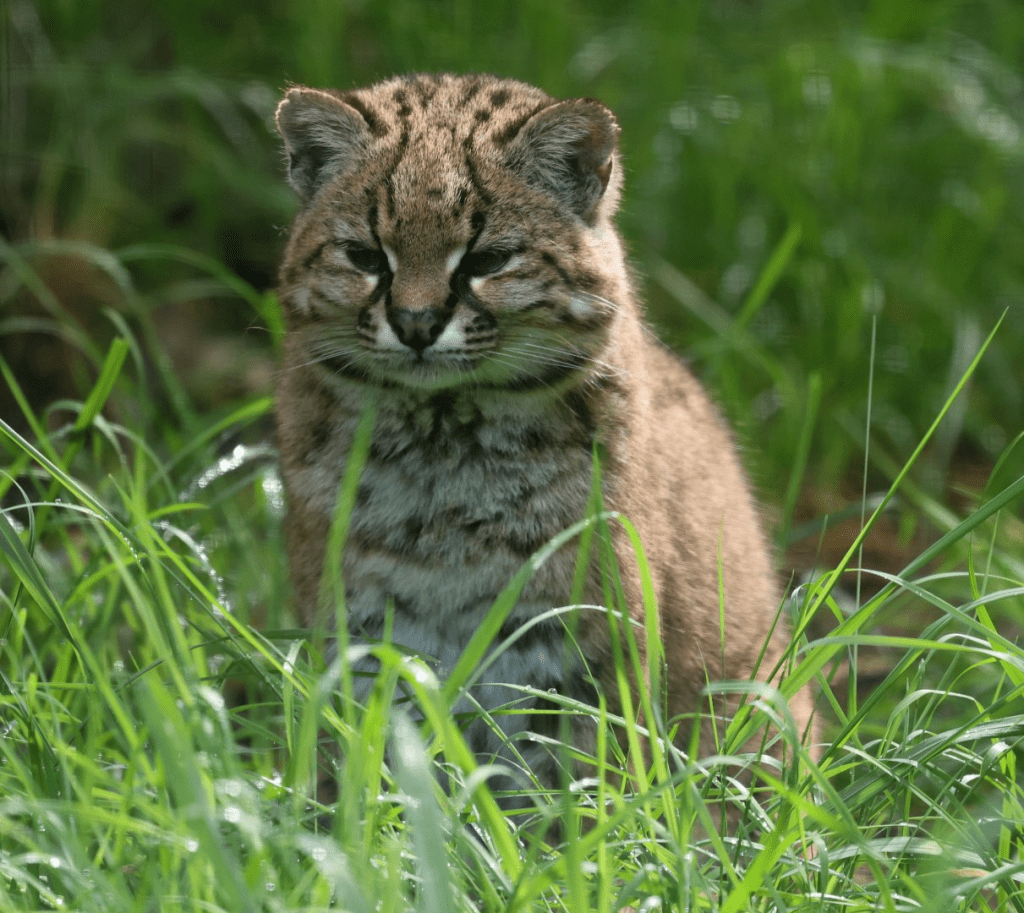
Photo by Pía Vergara, via Ladera Sur

The güiña, also known as the kodkod, is the smallest wild cat in the Americas—and one of the least known. But this rare feline has a big story. Native to the temperate rainforests of southern Chile and parts of Argentina, the güiña is elusive, solitary, and deeply woven into the landscape and culture of the region.

Its Mapudungun name—“güiña”—is a reflection of the Indigenous roots of its homeland. The scientific name, Leopardus guigna, may sound big, but the cat itself is tiny—usually no larger than a house cat, with spotted fur, rounded ears, and a tail nearly as long as its body.

Despite its small size and shy nature, the güiña plays an important role in its ecosystem as a predator of small mammals and birds. Sadly, its forest home is shrinking. As logging, agriculture, and urbanization continue to spread, the güiña faces increasing threats from habitat loss and fragmentation. It’s also sometimes killed by humans who mistakenly believe it preys on chickens or other domestic animals.

Today, the güiña is listed as Vulnerable on the IUCN Red List. With an estimated population decline of over 30% in the past decade, conservation efforts are more important than ever.

Credit: Photo taken at the private facility of Fauna Andina, Nov 2024 . By an unidentified contributor, via ZooChat

But there is hope.

Many organizations and researchers are working to protect this mysterious little feline. Here are a few ways you can help:

The güiña may be small, but she carries an ancient spirit—one that deserves space, safety, and a future. 🌲🐾

Photo credit: Nicolás Gálvez, via Wikimedia Commons

“Queen of the Tetons:” Remembering Bear 399

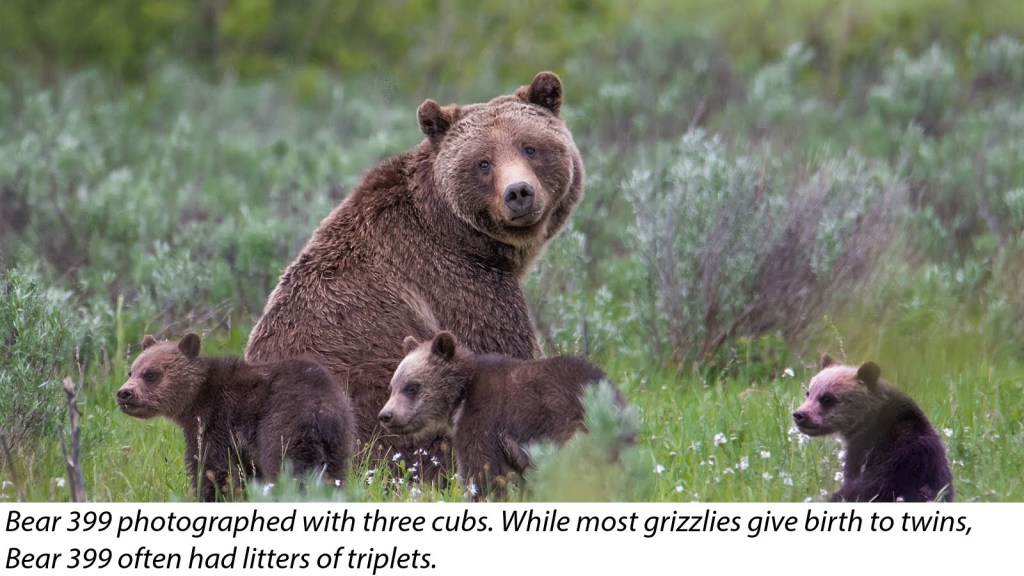
Life as a grizzly bear in the Lower 48 isn’t easy, but for 28 years, Bear 399 rose to the challenge.

Dubbed “Queen of the Tetons,” this charismatic mother gained fame successfully rearing cubs year after year.

In 2020 she became just the 14th grizzly ever known to give birth to quadruplets. In 2023, she became the oldest bear to give birth to a cub in the Greater Yellowstone Ecosystem.

But last October, Bear 399 gained a tragic title — she was the 51st grizzly struck and killed by a vehicle in the Greater Yellowstone area since 2009.

The life of 399 serves to illustrate both the achievements that have been made in grizzly bear rehabilitation in the Lower 48, and the long way we still have to go in learning how to coexist with these magnificent bears.

Not long ago, scientists feared the grizzly was doomed to extinction in the Lower 48. With as few as 300 left, grizzlies were granted protection under the Endangered Species Act in 1975. But by the mid-90s when Bear 399 was born, they were still struggling, with estimates placing the population around 400.

Over the course of Bear 399’s life, the population has expanded to an estimated 2,000 bears. Though still a far cry from the 50,000 bears that once traversed the western U.S. in the early 1800s, this remains an incredible achievement in species recovery, one that Bear 399 played a critical role in.

Bear 399 also served as an ambassador, revealing a softer side to a species written off by many as blood-thirsty brutes. In her leisurely strolls along roadways crowded with spectators, she demonstrated a lesser-known reality: like most wild animals, if given space and left alone, bears pose little threat to humans.

Of course, as humans continue to expand and move into grizzly habitat, space can become an issue. And more often than not, it’s the grizzlies who pay the price.

By one estimate, a heartbreaking 85% of all grizzly bears in the Lower 48 are killed because of humans before reaching old age.

Some bears are killed after hunting livestock, not understanding the differences between cows and wild elk. Some are poached illegally. Some bears are tempted by easy access to poorly-protected human food, and are euthanized in the interest of avoiding human-bear conflict down the road. Many are hit by cars.

Some of Bear 399’s cubs have suffered these fates.And in the end, Bear 399, too was killed by a human.

For too long, we have pitted bears against humans, either vying for the grizzly’s complete eradication, or allowing them to rebound while failing to address our own encroachment into their habitat.

It is time to forge an alternative path, one that gives bears the space to be bears, while also providing humans opportunities to appreciate these spectacular animals.

At Environmental Action, we’re advocating for the continued protection of grizzlies under the Endangered Species Act, working to increase wildlife crossings to limit animal collisions and supporting the preservation of wild areas where grizzlies can roam free.

So can humans and grizzlies coexist peacefully? If Bear 399’s life tells us anything, it’s that we can, but only so long as we’re willing to put in the work.

Thank you,

The Environmental Action team

‐———————-‐–‐——–

To learn more about the Environmental Action team and what they do. Go to https://environmental-action.org/