I’m so happy to share some good news! 🐶✨ Thanks to incredible whistleblowers, public outcry, and thousands of voices speaking up, including those who signed the petition on my blog—dogs will no longer be used in painful, invasive experiments at St. Joseph’s Hospital in London, Ontario.
For years, these sweet souls endured cruel, outdated heart attack experiments before being killed. But that ends now. 🙏
The fight isn’t over though—pigs and rodents are still suffering in the hospital’s hidden lab, and we’re pushing for all surviving animals to be rehomed instead of killed or sold for more experiments.
This win proves that when we speak up for animals, change is possible. 🌿💛 Let’s keep going for all the animals still waiting for freedom.
If you’d like to help keep the momentum going and support these causes, you can donate here: 👉 ajdonate.ca/stjos 💌 Every bit helps! 🐾✨
There are still places in Canada where foxes, coyotes, and rabbits are locked inside fenced enclosures—not to be rehabilitated or protected, but to be hunted for sport.
In these penned hunting facilities, dogs are released to chase, terrorize, and often kill wild animals that have no way to escape. Hunters call it “training.” But investigations show the truth: it’s bloodsport. It’s cruelty. And it’s still happening.
Recently, Animal Justice filed a lawsuit against the Ontario government, challenging the issuance of three illegal licences that appear to allow penned hunting facilities to operate in violation of the Fish and Wildlife Conservation Act. These licenses permit the use of large hound breeds—such as foxhounds, coonhounds, and bloodhounds—to chase red foxes for “training” and competitions, despite clear regulations that prohibit this unless strict conditions are met. None of the three sites in question meet the legal pen size requirements.
An undercover investigation in 2023 by Animal Justice revealed that wild animals used as bait are routinely injured, mauled, and killed. Pen owners have admitted to replenishing wildlife throughout the year—foxes and coyotes caught and used again and again.
Worse still, no inspections have been conducted at these facilities for at least two years. The system is broken—and these animals are paying the price.
Ontario remains the only province in Canada that still allows this practice. Even most U.S. states have banned it.
This is not just a wildlife issue—it’s an animal cruelty crisis.
For as long as humans have lived on Earth, wolves have existed alongside us, from the tundra of North America to the islands of Japan. Here are just a few of the world’s remarkable wolf species.
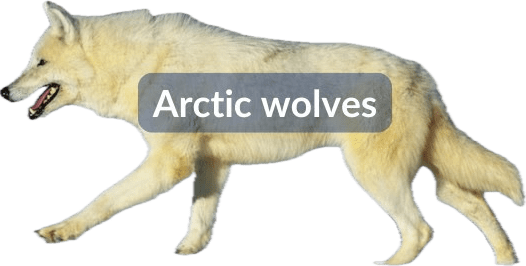
Arctic wolves are a sub-species of gray wolf that lives in the frozen northern tundra. Their beautiful white coats enable them to blend into their snowy surroundings as they hunt for arctic hares, lemmings and even caribou and bulky muskoxen.
In some ways, arctic wolves are lucky to live in such a distant part of the globe. Their isolation makes them one of the only grey wolf sub-species to not be threatened by widespread hunting. However,increased mining and oil drilling may put their food supply at risk.
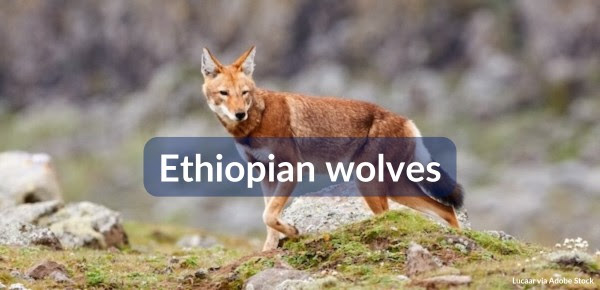
The rare and mysterious Ethiopian wolf lives in Ethiopia’s highlands. Fewer than 500 of them survive in the wild, making them one of the most endangered wolf species in the world.
These wolves have some of the most unusual diets of wolf species including, of all things, nectar! The highlands of Ethiopia contain large flowers, which the wolves have learned to lick for the sweet liquids inside.
But the flowers have the last laugh. When the wolves steal nectar, their noses become caked in pollen, which then gets transferred between flowers. This unusual relationship makes wolves the world’s biggest carnivorous pollinators.
Japanese folklore is full of stories about wolves. The Japanese wolf, known for its tiny ears, lived for thousands of years in Japan. Although they were technically a sub-species of gray wolf, the Japanese wolves diverged from their larger cousins and soon became genetically distinct.3
Tragically, the Japanese wolves are no more. The entire species was wiped out by the early 1900s after a systematic extermination campaign. Now, they remain only in story and myth.
The tragic tale of the Japanese wolf should remind us that we can’t take any species for granted. And once a species is wiped out, there’s no way to turn back the clock.
The environmental action team has been around since the first Earth Day in 1970, and their whole mission is to protect wildlife and wild places by helping people take meaningful action. From speaking up for wolves and bees to keeping our air and water clean, they’re doing important work.
They also have a little online store where you can grab eco-friendly gear and gifts that help support the cause—things like stickers, wildlife-themed tees, and more. And if you’re in the spirit to give back, they make it easy to donate directly to their campaigns.




 coyotepretty.ca