Day 4 of Coyote Awareness Week

This is a passage from the book Coyote America by Dan Flores.

Bright Lights, Big Cities

Photo by Johanna Turner


If it seems counter intuitive that a predator like a coyote would find life in town to be fat-city, consider this additional evidence; in rural Illinois, where residents shoot, trap, and harass coyotes, only 13 percent of coyote pups survive to maturity. In the Chicago metropolitan area, a whopping 61 percent of coyote pups survive to adulthood. Like human adolescents, male coyote pups are always the most at-risk pack members. the easiest to trap or poison or shoot. But in town young male coyotes tend to survive at the same rate as females.

In fact, only in preserved wildlands like national parks does coyote survivability compare to what coyotes experience in cities. For a twenty-first century coyote, town life is pretty obviously the good life, especially compared to the dangers of rural America. We’re going to have to start imagining cities as twenty-first-century coyote preserves in much the way national parks were in the twentieth century.


If you want to buy this amazing book, click here for US customers or here for Canadian customers.

Today is Day 3 of Coyote Awareness Week

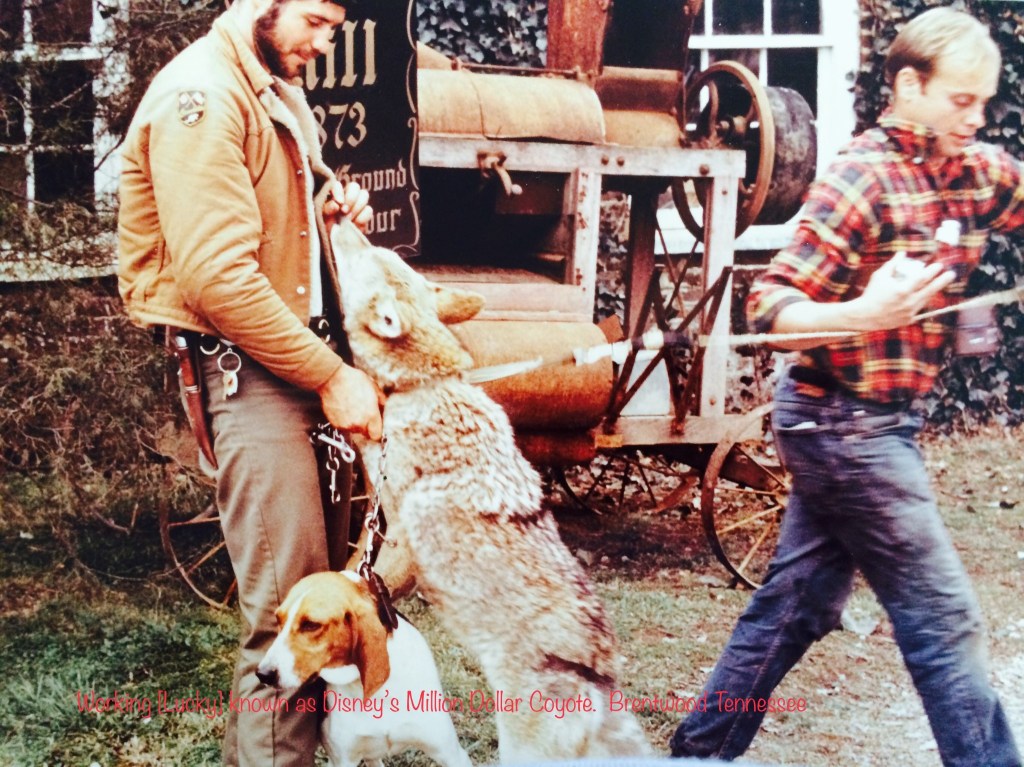
The Nashville Coyote

The Nashville Coyote album and film.

This is the album cover ^^^^

The Tracklist

1. Talkin’ Blues

2. Goin’ Where The Rails Go

3. Before I Met You

4. Hanging On the Fringe of Music City

5. Coyote Blues

6. You Can’t Go In the Red Playin’ Bluegrass

7. That Little Tune

8. The Last Longhorn

9. Goin’ Back

10. Down In Nashville, Tennessee

The Nashville Coyote film aired on October 1, 1972. Directed by Winston Hibler.

A surprised coyote stowaway on a freight train ends up in Nashville where he meets a friendly beagle and an aspiring songwriter. The songwriter is unable to sell his songs, so he returns to California, taking the coyote back to his desert home. Stars Walter Forbes, William Garton, Eugene Scott, Michael Edwards. Narrated by Mayf Nutter.

^^^You can watch the movie here.

Day 2 of Coyote Awareness Week!

Meet Ricky Bobby

This little guy was adopted by another coyote named Weave. Ricky Bobby was most likely orphaned and Weave saved him.

The little coyote named Ricky Bobby eventually went back to the wild in late Sept 2024.

If you would to see more of Weave the coyote, head over to Timmy Mc.

Why killing coyotes doesn’t work

When coyotes are killed, especially adults, the remaining coyotes often increase their reproductive rates to compensate for the loss. Females may have more pups in the next breeding season, or the surviving pack members may breed earlier or more frequently. This “compensatory reproduction” is a well-documented phenomenon in many animal species when their numbers are reduced by hunting or trapping.

Coyotes live in complex social structures, with dominant alpha pairs leading packs. When these dominant members are killed, other members of the pack may step up to take their place, and in some cases, subdominant coyotes may breed more. This can lead to increased reproductive output and larger litters of pups.

Coyotes are territorial animals, and when one coyote is removed from an area, it creates a “vacuum” that other coyotes quickly fill. New coyotes moving into the area may breed quickly and produce more offspring to establish their territory. This territorial replacement can contribute to a rise in coyote numbers in a given region.

If coyotes are killed in one area, coyotes from nearby regions may migrate into the area to replace those lost. These newcomers may breed and repopulate the area even faster than the original population.

In nature, species like coyotes fulfill an important ecological role in regulating other populations (e.g., rodents, rabbits, etc.). Removing coyotes can upset this balance, potentially leading to overpopulation of prey species. The increased numbers of prey may, in turn, attract more coyotes from nearby areas, ultimately leading to no net reduction in the overall population.

Sustainable, non-lethal management methods are more effective in controlling coyote numbers.

Today is Day 1 of Coyote Awareness Week!

Coyotes (Canis latrans) play a significant role in both society and ecosystems.

Coyotes are apex predators and help regulate populations of small mammals, birds, and insects, which in turn helps control pests that could otherwise become overabundant, such as rodents (e.g., rats and mice).


Coyotes are also opportunistic scavengers. They contribute to the breakdown of organic material by feeding on carcasses, helping to recycle nutrients back into the ecosystem.


By controlling populations of prey species, coyotes indirectly support the diversity of plant and animal life, as they help prevent overgrazing or depletion of plant species by herbivores.


Coyotes have demonstrated an impressive ability to adapt to a wide range of habitats, from rural wilderness areas to urban environments. This adaptability makes them a crucial part of many ecosystems, helping to keep certain species in check, even as human expansion alters their environment.


Coyotes help regulate populations of animals like deer, rodents, and smaller carnivores (e.g., foxes and raccoons). This is important because unchecked populations of these species could result in overgrazing, damage to crops, or the spread of diseases like Lyme disease from ticks.


In ecosystems where larger predators like wolves have been extirpated, coyotes often fill that ecological niche, acting as a stabilizing force in the absence of larger carnivores.


Coyotes are highly important both for their role in ecosystems and in society. They contribute to biodiversity, pest control, and nutrient recycling, and they also have cultural, educational, and symbolic value. While human-wildlife interactions with coyotes can be complex, they are generally beneficial to the health of natural systems.


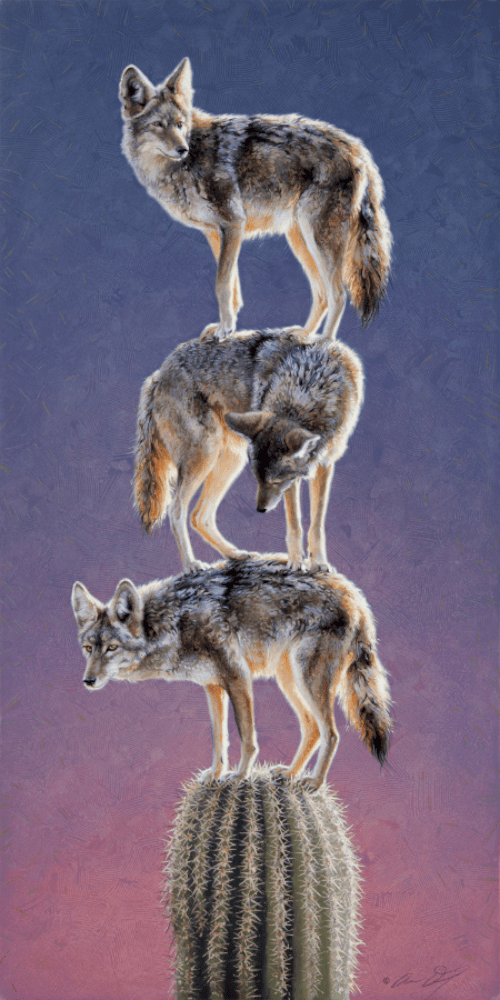
“Totem #19: Stacked Coyotes, Desert Dusk” by wildlife artist Andrew Denman. Click here to learn more about this piece.

Coyotes & Golden Jackals

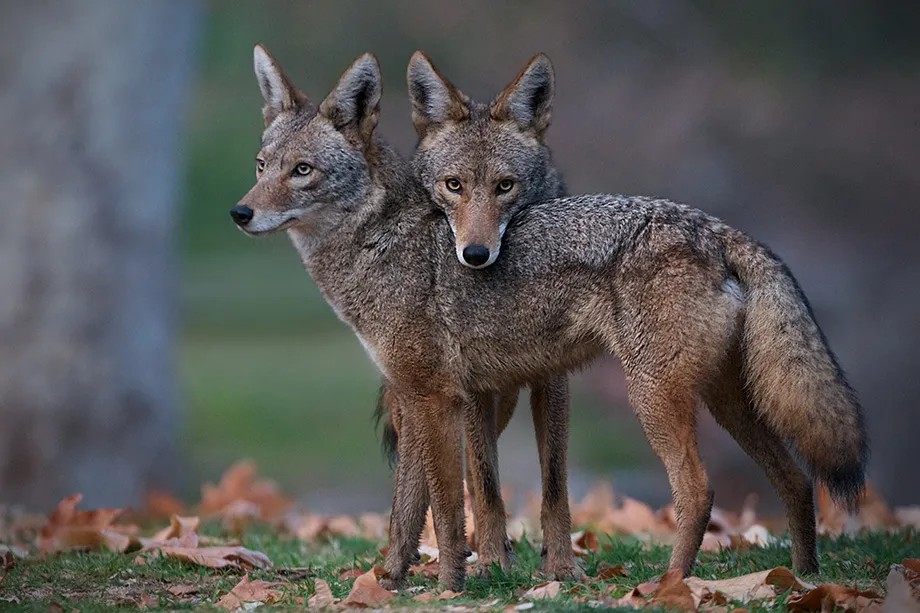
Pair of coyotes, photograph by Sean Crane

Coyotes (canis latrans) and golden jackals (canis aureus) share several intriguing similarities, especially in terms of their adaptability and ability to expand their territories in response to environmental changes.

Both species have demonstrated impressive resilience and resourcefulness, allowing them to thrive in a variety of habitats.

Some similarities between coyotes and golden jackals that might explain their territorial expansion.

Adaptability to Changing Environments

Both coyotes and golden jackals are incredibly adaptable animals. They have learned to live in a variety of environments, from rural areas and agricultural lands to urban spaces.

This ability to adjust to different landscapes, food sources, and climate conditions is one of the main reasons they’ve been able to expand their territories.

Coyotes have been able to adapt to urbanization in North America, living in cities and suburbs, where they find ample food sources such as rodents and garbage. This flexibility has allowed them to push further into areas previously dominated by humans.

Golden jackals have also shown remarkable adaptability. They’ve expanded their range from their native regions in Asia, the Middle East, and parts of Africa, moving into Southeastern Europe, and now even Central Europe, likely due to the availability of food and less competition from larger predators.

Opportunistic Diet

Both species are opportunistic omnivores, meaning they can survive on a wide variety of food. This flexibility in diet enables them to thrive in changing environments, particularly where other animals may struggle.

Coyotes will eat small mammals, fruits, birds, insects, and even plants, making them highly adaptable to different environments. Their ability to scavenge human food also helps them survive in urban settings.

Golden jackals also have a varied diet, feeding on everything from small mammals and birds to fruit and even carrion. In fact, like coyotes, they are known to scavenge from human settlements when necessary.

Expansion into New Territories

Both species have been able to expand their ranges due to human-induced changes in the environment. As human development spreads, they move into new areas where resources are available, often without much competition from larger predators.

Coyotes expanded their range significantly in the 20th century, moving from the western United States to all parts of North America, even as far as Central America. Their ability to avoid conflict with other predators like wolves and their skill in adjusting to urban environments contributed to this expansion.

Golden jackals, once confined to parts of Asia and Africa, have expanded into new regions in Europe and are now found in places like Greece, Croatia, and even the Balkans.

Some researchers believe their range expansion has been driven by factors such as climate change, loss of natural predators, and the availability of food from human settlements.

Social Structure and Behavior

Both coyotes and golden jackals are known for their social structures. They live in small family units or packs, which helps them effectively hunt and defend territory.

Coyotes are often seen alone or in small family groups. They are highly social within their packs and have complex communication systems to hunt together and protect territory.

Golden jackals also live in family units and are highly social animals. They are known for hunting in pairs or small groups, and their ability to cooperate in groups helps them exploit food sources in both rural and urban areas.

Ability to Coexist with Humans

Both species have developed an unusual ability to coexist with humans, at least to a degree. While some conflict may occur, especially in rural or agricultural areas, both species have shown that they can adapt to human presence and even benefit from human waste or food.

Coyotes have found ways to live in urban areas, where they may roam through parks, neighborhoods, and even city streets. Their ability to adapt to human spaces has allowed them to thrive despite their growing population.

Golden jackals are less commonly found in urban spaces compared to coyotes, but their range expansion into human-dominated landscapes, including agricultural regions, shows they are similarly able to adjust to human environments.

Resourceful and Resilient

Both coyotes and golden jackals are incredibly resilient species. They are survivors, able to deal with challenges such as predators, environmental changes, and food scarcity.

Coyotes have dealt with the eradication efforts made against them in the past and are now one of the most widespread carnivores in North America.

Golden jackals have successfully expanded their range despite the challenges of living alongside human populations, showing their resilience in the face of threats such as habitat loss and competition with larger carnivores.

Challenges of Expanding Territories

While both species are incredibly resourceful and adaptable, their expansion into new territories isn’t always without conflict.

Coyotes often encounter competition with larger predators like wolves or mountain lions, which can limit their ability to expand into certain regions.

Golden jackals face competition from wolves in Europe, which can restrict their movements in some areas, but they are still thriving in places where wolves are less common.

The similarities between coyotes and golden jackals highlight their incredible adaptability, resourcefulness, and ability to thrive in changing environments. Their ability to expand their territories despite human development and increased competition shows how these species are able to adjust to new challenges and continue to flourish.

Their success in new environments could also be seen as a testament to their resilience and intelligence, which enables them to carve out niches in landscapes where other animals may struggle.

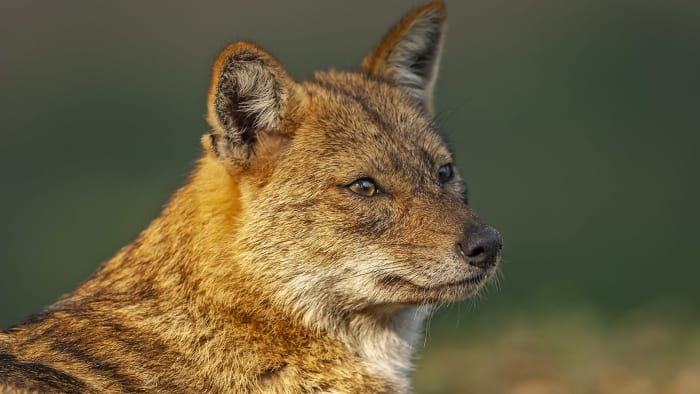
A golden jackal

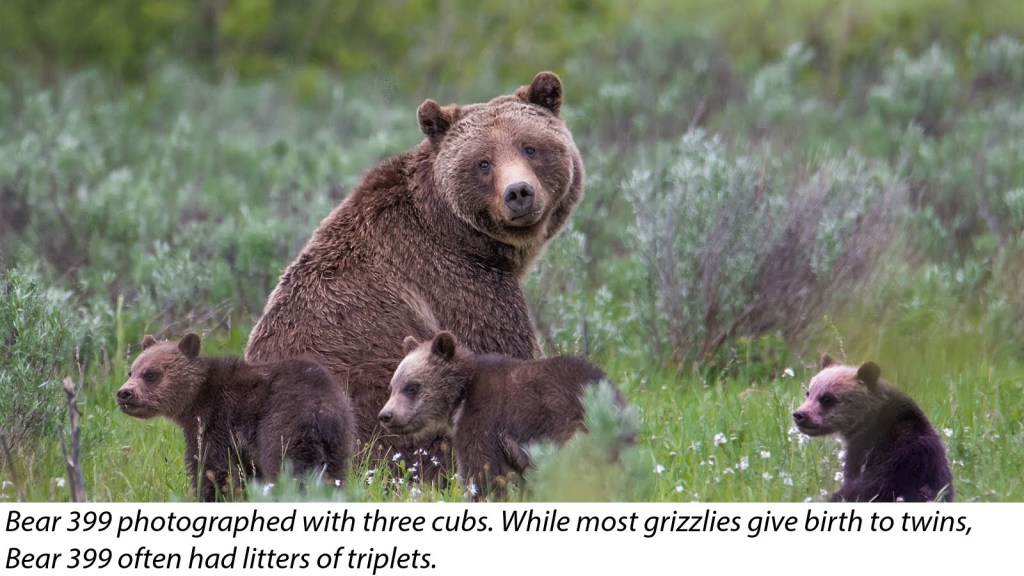
“Queen of the Tetons:” Remembering Bear 399

Life as a grizzly bear in the Lower 48 isn’t easy, but for 28 years, Bear 399 rose to the challenge.

Dubbed “Queen of the Tetons,” this charismatic mother gained fame successfully rearing cubs year after year.

In 2020 she became just the 14th grizzly ever known to give birth to quadruplets. In 2023, she became the oldest bear to give birth to a cub in the Greater Yellowstone Ecosystem.

But last October, Bear 399 gained a tragic title — she was the 51st grizzly struck and killed by a vehicle in the Greater Yellowstone area since 2009.

The life of 399 serves to illustrate both the achievements that have been made in grizzly bear rehabilitation in the Lower 48, and the long way we still have to go in learning how to coexist with these magnificent bears.

Not long ago, scientists feared the grizzly was doomed to extinction in the Lower 48. With as few as 300 left, grizzlies were granted protection under the Endangered Species Act in 1975. But by the mid-90s when Bear 399 was born, they were still struggling, with estimates placing the population around 400.

Over the course of Bear 399’s life, the population has expanded to an estimated 2,000 bears. Though still a far cry from the 50,000 bears that once traversed the western U.S. in the early 1800s, this remains an incredible achievement in species recovery, one that Bear 399 played a critical role in.

Bear 399 also served as an ambassador, revealing a softer side to a species written off by many as blood-thirsty brutes. In her leisurely strolls along roadways crowded with spectators, she demonstrated a lesser-known reality: like most wild animals, if given space and left alone, bears pose little threat to humans.

Of course, as humans continue to expand and move into grizzly habitat, space can become an issue. And more often than not, it’s the grizzlies who pay the price.

By one estimate, a heartbreaking 85% of all grizzly bears in the Lower 48 are killed because of humans before reaching old age.

Some bears are killed after hunting livestock, not understanding the differences between cows and wild elk. Some are poached illegally. Some bears are tempted by easy access to poorly-protected human food, and are euthanized in the interest of avoiding human-bear conflict down the road. Many are hit by cars.

Some of Bear 399’s cubs have suffered these fates.And in the end, Bear 399, too was killed by a human.

For too long, we have pitted bears against humans, either vying for the grizzly’s complete eradication, or allowing them to rebound while failing to address our own encroachment into their habitat.

It is time to forge an alternative path, one that gives bears the space to be bears, while also providing humans opportunities to appreciate these spectacular animals.

At Environmental Action, we’re advocating for the continued protection of grizzlies under the Endangered Species Act, working to increase wildlife crossings to limit animal collisions and supporting the preservation of wild areas where grizzlies can roam free.

So can humans and grizzlies coexist peacefully? If Bear 399’s life tells us anything, it’s that we can, but only so long as we’re willing to put in the work.

Thank you,

The Environmental Action team

‐———————-‐–‐——–

To learn more about the Environmental Action team and what they do. Go to https://environmental-action.org/

Eastern Coyote, Canis Latrans

When a plant or animal can easily manage to survive and share the ever-changing world around humans, we frequently assign it one of two titles. “Invasive” (see above), or “Pest”. But what other words should we consider? “Successful”? “Thriving”, now that’s a word that doesn’t apply to many species worldwide in this time of mass extinction. Maybe “Adaptable” or “Resilient”, just as many of us have learned to be over the past few years. 

The eastern coyote has been called all of these things. While they are indigenous to North America, their ancestors only moved into the northeast when colonists eradicated their biggest competition, wolves. With miles of forests, fields, and farmlands freshly available with no bigger predators to push them out, coyotes became very successful in the northeast. The subspecies that lives around us has genes from wolves and dogs too, but now for the most part they stick to groups of their own species. When big families get together they can get chatty (like a lot of human family gatherings, I’d say), and their yelping and howling can make an evening feel like it has just a bit more wildness than before. 

The eastern coyote is one of those animals that everyone is certain to be an expert in, even if maybe their facts are a bit exaggerated. That doesn’t mean there aren’t neat things to learn about this relatively common species!

Did you know that in addition to eating meat, coyotes spend their summers munching on insects, plants, and berries?

Did you know that the eastern coyote, while larger than the western subspecies, are still typically only 20 to 45 pounds? That’s about the size of a border collie or a cattle dog!

Did you know that in addition to farms and fields, coyotes have been known to live in the Bronx and Queens?

Did you know that coyotes help keep the ecosystem tidy and free of disease by eating roadkill and other carcasses?

Did you know that coyotes are monogamous and mate for life?

While they get blamed for all sorts of scary phenomenon and many people are nervous of all of our local predators, it’s important to remember that they are just doing what works well for them to survive. After all, we moved (and continue to move) into their spaces. But, coexisting with coyotes is possible!

https://wallkillvalleylt.org/2022/01/species-spotlight-coyote-and-mugwort/